
Reading about formulas only goes so far; real mastery comes from practice. This guide walks through circle area practice problems, offering worked circle area examples covering whole numbers, decimals, fractions, and reverse calculations.
How to Use the Circle Area Formula
The circle area formula, A = πr², forms the foundation for every problem ahead. Square the radius, multiply by pi, and you've found the circular area. This single formula handles nearly every situation.
Before solving any circle area problems, confirm whether you're given radius or diameter. This quick check, part of every solid circle formula practice routine, prevents wasted effort correcting avoidable early mistakes.
How to Solve Basic Circle Area Problems
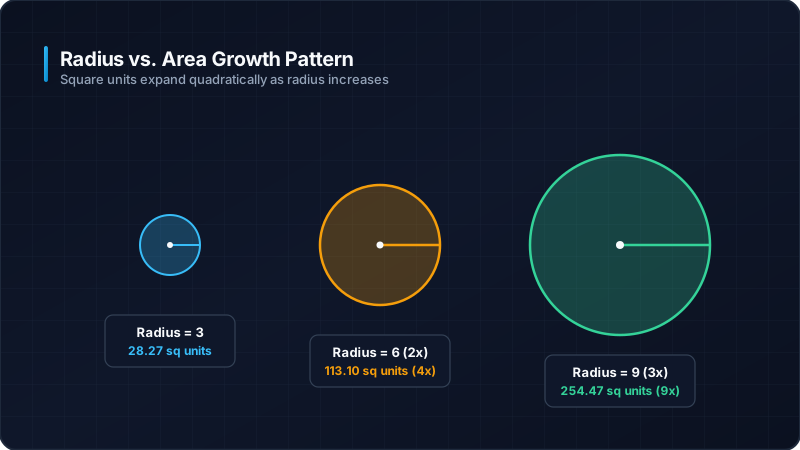
Start simple. For radius 3, calculate 3² = 9, then multiply by pi: 28.27 square units. This easy circle area problems approach builds confidence before tackling trickier circle area word problems later in practice sets.
Try radius 7 next: 7² = 49, times pi equals 153.94 square units. Repetition with whole number radii like these builds speed and comfort before moving toward messier decimal and fractional examples.
How to Find Area When the Radius Is a Whole Number
Whole number radii keep calculations clean and predictable. Radius 6 gives 36 times pi, or 113.10 square units. Radius 9 gives 81 times pi, or 254.47 square units, following the identical circle area formula practice.
| Radius (r) | Formula Step (π × r²) | Calculated Area |
|---|---|---|
| 3 | π × 3² = 9π | 28.27 sq units |
| 6 | π × 6² = 36π | 113.10 sq units |
| 9 | π × 9² = 81π | 254.47 sq units |
This radius area practice table shows how quickly area scales upward as radius increases steadily.
How to Work With Decimal and Fractional Radii
Circle area with decimal radius problems need careful multiplication. For radius 4.5, square it first: 20.25, then multiply by pi, giving 63.62 square units. This circle area decimals approach avoids early rounding errors.
For fractional radii like 2½, convert to 2.5 first. Squaring gives 6.25, times pi equals 19.63 square units. This circle area fractions conversion habit keeps every calculation consistent and accurate throughout the process.
How to Round Circle Area Answers Correctly
Most circle area answers round to two decimal places unless instructed otherwise. Using 3.14 instead of full pi introduces slight rounding differences, so always confirm which approximation a specific problem expects beforehand.
Comparing exact circle area using symbolic pi against approximate circle area using 3.14 or 3.14159 shows small but noticeable differences on larger radii. Consistency matters more than precision level here.
How to Check Circle Area Solutions
How to check circle area answer accuracy means reversing your work. Divide your final area by pi, then find the square root, confirming it matches your original radius. This habit catches most careless errors.
This circle area rounding examples check also reveals whether early rounding compounded into a larger final error. Building this verification habit into every circle area exercises session improves long-term accuracy significantly.
How to Solve Reverse Problems When Area Is Given
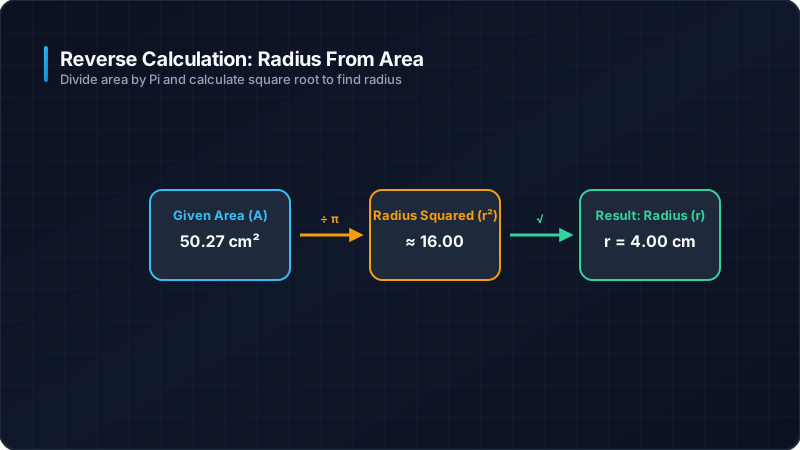
Sometimes a problem gives area and asks for radius from area. Divide the area by pi, then find the square root of that result. This circle area reverse calculation reverses the standard formula completely.
For an area of 50.27 square units, divide by pi to get approximately 16, then take the square root to find radius 4. This area to radius problems method works reliably in every case.
How to Handle Real-World Circle Area Measurements
Real life circle area problems often involve gardens, pools, or tables. A circular garden area with radius 8 feet covers roughly 201.06 square feet, useful information for buying mulch, fencing, or seed accurately.
Similarly, a circular pool area or circular table area calculation follows identical math, just applied to practical shopping and planning situations rather than abstract classroom circle math problems without real context.
How to Recognize Which Circle Measurement a Problem Provides
Always scan word problems carefully for radius, diameter, or even circumference clues before beginning. Misreading which circle measurement was given ruins an otherwise correctly calculated circle area problems for students attempt entirely.
Practicing this recognition skill through varied circle area word problems builds sharper reading habits. Soon, spotting the given measurement type becomes automatic, saving valuable time during timed circle area quiz situations.
Conclusion: How to Solve Circle Area Practice Problems
Consistent practice across whole numbers, decimals, fractions, and reverse problems builds genuine circle area mastery. These worked circle area examples show the formula stays reliable no matter how the numbers get dressed up.