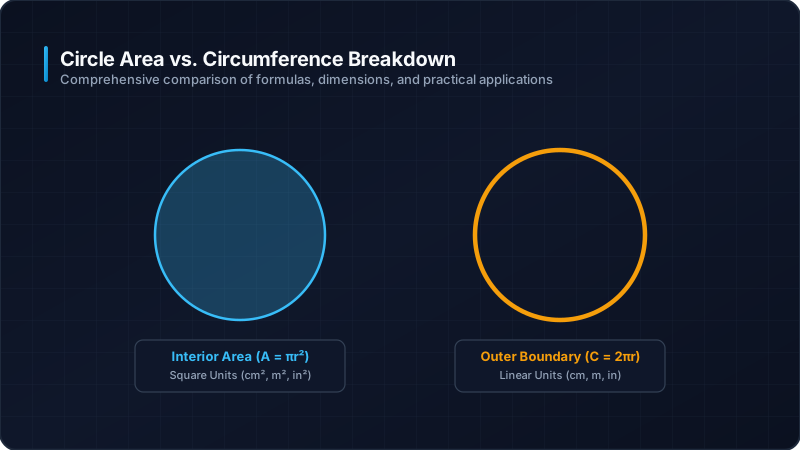
Two of geometry's most common formulas often get confused together. This guide breaks down circle area vs circumference difference, showing exactly what each measurement represents and why their formulas look so different.
What Does Circle Area Measure?
Circle area measures the interior space filling an entire circular shape. It answers "how much surface is inside?" using square units like square inches or square meters to represent that two-dimensional space.
This circle interior space concept applies whenever covering, filling, or measuring surface matters, like painting a circular sign or calculating fabric needed for a round tablecloth accurately and completely.
What Does Circumference Measure?
Circumference measures the total boundary length surrounding a circular shape. It answers "how far around?" using linear units like inches or meters, since it represents a single one-dimensional distance measurement.
This circle boundary length concept applies whenever wrapping, fencing, or bordering matters, like calculating trim needed around a circular window or fencing required for a round garden bed.
How Area and Circumference Formulas Differ
Circle area formula uses A = πr², involving radius squared. Circle circumference formula uses C = 2πr, involving radius multiplied simply by two and pi, without any squaring operation required at all.
This structural difference explains their different growth rates. As radius increases, circumference grows steadily, while area grows much faster, since squaring amplifies increases far more dramatically than simple multiplication.
Why Their Units Are Different
Square area units exist because area represents two dimensions multiplied together, essentially length times width. Linear circumference units exist because circumference represents just one single dimension, a straight-line distance measurement.
This why circumference uses linear units distinction isn't arbitrary convention; it reflects genuine mathematical reality. Confusing square units with linear units signals a fundamental misunderstanding worth correcting early in learning.
How Radius and Diameter Affect Both Measurements
Both circle area and circumference depend entirely on radius, though diameter works too after conversion. Larger radius circle formula inputs increase both measurements, just at dramatically different mathematical rates.
| Radius (r) | Circumference (2πr) | Area (πr²) |
|---|---|---|
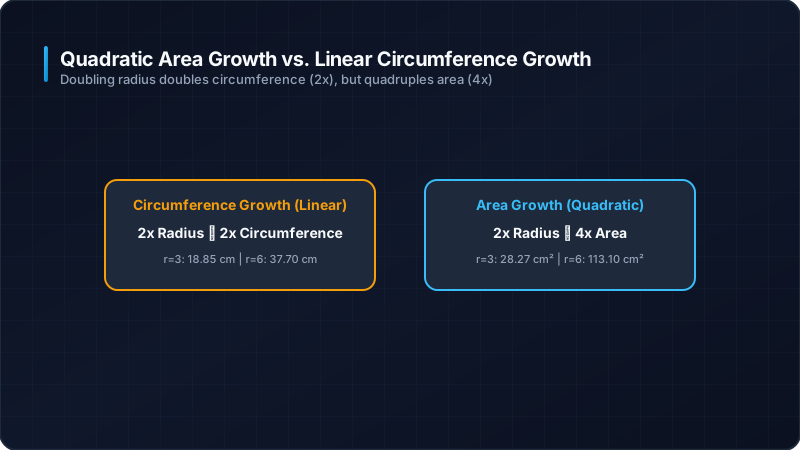
| 3 | 18.85 | 28.27 |
| 6 | 37.70 | 113.10 |
| 9 | 56.55 | 254.47 |
How to Compare Area and Circumference in Examples
Notice from the table above that doubling radius from 3 to 6 exactly doubles circumference, but quadruples area. This compare area and circumference pattern holds true for every circle, regardless of scale.
This area circumference comparison demonstrates their fundamentally different mathematical behavior clearly. Recognizing this pattern helps predict outcomes before calculating, building stronger overall circle geometry explained intuition over time.
How Area Represents the Interior While Circumference Measures the Boundary
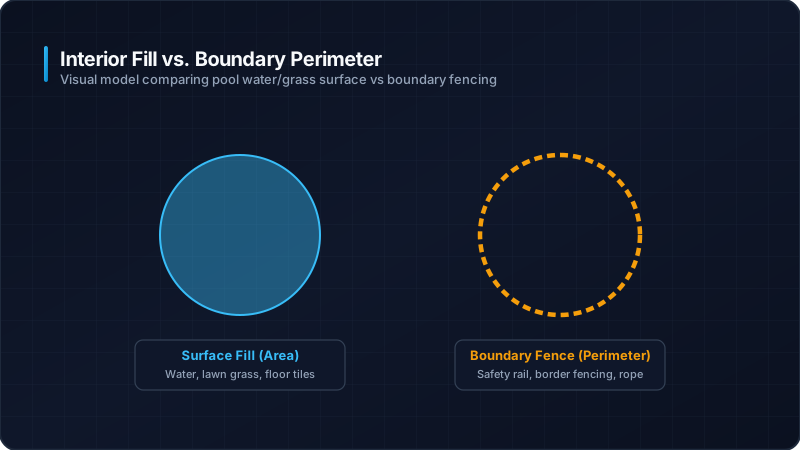
Visualize a circular swimming pool. Circle area tells you how much water fills the pool. Circumference tells you how much decking surrounds its outer edge. Both matter, but for completely different purposes.
This interior area versus boundary framing helps clarify real-world applications instantly. Whenever "filling" or "covering" comes up, think area. Whenever "surrounding" or "wrapping" comes up, think circumference instead.
How Real-World Objects Use Both Circle Measurements
A wheel circumference determines how far it travels per rotation, useful for calculating speed or distance. A wheel area, meanwhile, matters less practically but still applies in manufacturing and material calculations.
Similarly, plate area determines food capacity, while its edge length matters for decorative trim. Recognizing which circular object measurement actually matters prevents wasted calculation effort on irrelevant values.
Why Increasing Radius Changes Area Faster Than Circumference
Because area relies on radius squared while circumference relies on radius alone, area's growth rate accelerates faster as radius increases. This radius squared relationship versus linear radius relationship explains the disparity.
This circle growth pattern matters practically too. A slightly larger pizza radius creates dramatically more eating surface area than the modest increase in crust edge length might initially suggest to shoppers.
Conclusion: Circle Area vs Circumference Explained
Circle area and circumference measure fundamentally different things: interior space versus boundary length. Understanding this area versus perimeter circle distinction, along with their different formulas and units, clarifies circle geometry completely and permanently.