
Two circle formulas often get tangled together in students' minds. Knowing exactly when to use circumference formula versus when to use area formula solves this confusion instantly. This guide clears up the difference completely.
What Is Circle Area?
Circle area measures the interior space enclosed within a circular boundary. Calculated using A = πr², this value always appears in square units, reflecting the two-dimensional space filling the entire circular region.
Think of circle area as the amount of paint needed to cover a circular tabletop completely. This area measurement concept anchors half of the confusion this guide aims to resolve permanently.
What Is Circumference?
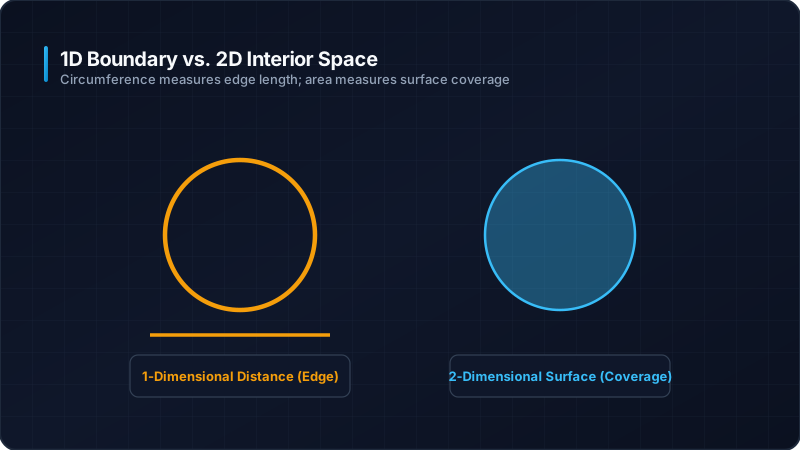
Circumference measures the total distance around the circular boundary itself, like walking the entire edge. Calculated using C = 2πr, this value always appears in linear units, not squared like area.
Think of circumference as the length of fencing needed to enclose a circular yard completely. This circumference measurement concept represents the second half of the area-versus-perimeter comparison explored throughout this guide.
How the Two Circle Measurements Differ
The core circle area vs circumference difference lies in dimension. Area fills space; circumference outlines a boundary. One uses radius squared; the other uses radius multiplied simply by 2 and pi.
| Measurement | Formula | Units |
|---|---|---|
| Circle area | A = πr² | Square units (cm², m², in²) |
| Circumference | C = 2πr | Linear units (cm, m, in) |
This table captures the entire circle formulas comparison at a single glance.
How to Choose the Correct Formula From a Question
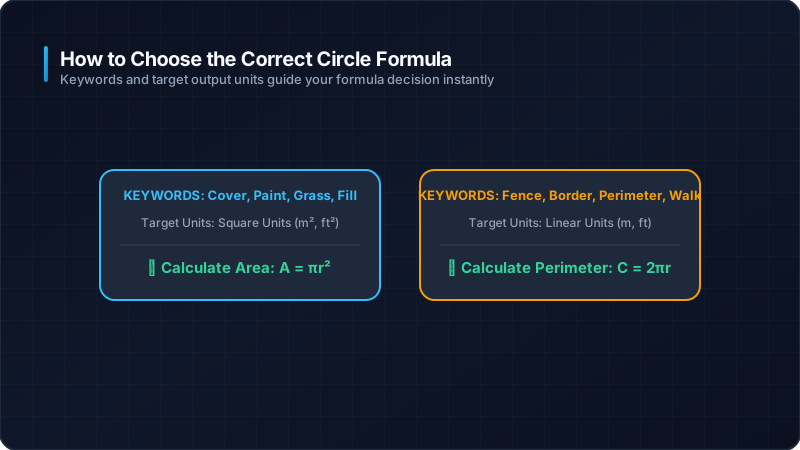
Read carefully for keywords. Words like "cover," "space," "surface," or "interior" signal circle area. Words like "around," "border," "edge," or "distance" signal circumference. This choosing circle formulas habit prevents most mix-ups.
Practicing this keyword recognition across many circle word problems builds instinct quickly. Soon, identifying when to use circumference formula versus area becomes automatic, without needing to reread confusing word problems repeatedly.
How Units Reveal Whether You Need Area or Circumference
If a problem's answer requires square units like square feet or square meters, you need circle area. If it requires linear units like feet or meters alone, you need circumference instead.
This square units versus linear units clue works even when word problems hide their intent cleverly. Checking required output units first is often the fastest, most reliable circle formula comparison shortcut available.
How to Solve Problems That Give Radius or Diameter
Both formulas need radius, so remember to convert diameter to radius first if only diameter appears. Divide diameter by two, then proceed normally with either the area equation or circumference equation.
For diameter 10, radius becomes 5. Area equals π(25) = 78.54 square units. Circumference equals 2π(5) = 31.42 units. This radius area circumference and diameter area circumference comparison shows both paths clearly.
How Visual Clues Can Help Identify the Required Measurement
Diagrams showing shaded interior space typically ask for circle area. Diagrams showing a highlighted boundary line typically ask for circumference. These visual clues offer a fast alternative to careful word-by-word reading.
Combining visual inspection with keyword scanning creates a reliable double-check system. This layered approach to circle geometry basics minimizes errors even under timed testing pressure or rushed homework conditions.
Why Area Uses Square Units but Circumference Uses Linear Units
Area fills a two-dimensional space, requiring square units to represent length times width conceptually. Circumference measures a single one-dimensional distance, requiring only standard linear units without any squaring involved.
This unit difference isn't arbitrary; it reflects genuine dimensional reality. Understanding why area uses square units deepens overall number sense, beyond simply memorizing which circle formulas to apply mechanically.
How to Avoid Mixing Up Circle Formulas
Keep a simple circle formula chart nearby during practice. Reviewing area circumference comparison tables regularly reinforces the visual and conceptual distinction until recalling the correct formula becomes second nature entirely.
Common circle formula mistakes include squaring radius for circumference or forgetting to square it for area. Careful, deliberate formula selection before calculating prevents these circumference or area quiz errors reliably.
Conclusion: How to Choose Between Area and Circumference
Choosing between circle area and circumference comes down to reading carefully and checking required units. With practice using this circle formula guide, selecting the correct circle formulas becomes fast and genuinely automatic.