
Sometimes a problem hands you the distance around a circle instead of its radius directly. Learning how to find area from circumference unlocks these reverse problems using one extra algebraic step beforehand.
What Information Does Circumference Give You?
Circumference measures the total boundary distance around a circle. Unlike radius or diameter, it doesn't directly plug into the area formula, requiring one conversion step before circle area becomes calculable.
Recognizing this circumference to area relationship early prevents confusion. This reverse circle calculation process, though slightly longer, still relies entirely on formulas already familiar from standard circle geometry lessons.
How to Rearrange the Circumference Formula
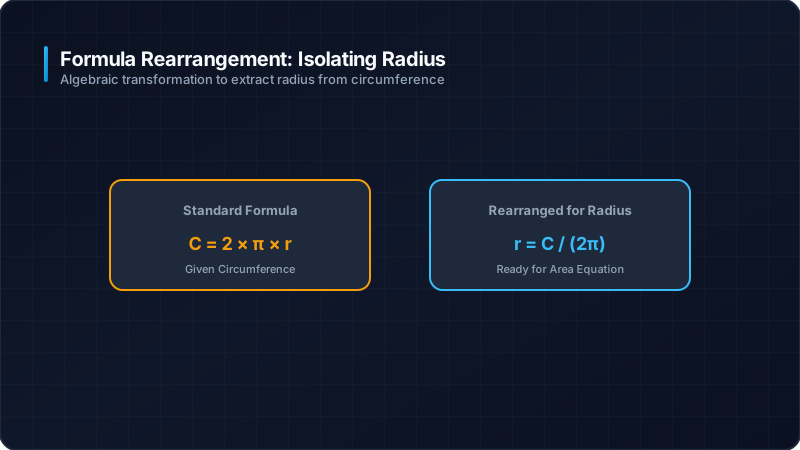
Starting from C = 2πr, rearrange to solve for radius: r = C / (2π). This circumference formula rearrangement isolates the value needed before moving forward into the actual area formula calculation.
This radius equals circumference divided by 2 pi relationship is simply algebra applied to a familiar formula. Practicing this rearrangement builds confidence for handling other reverse geometry problems encountered later in study.
How to Find Radius From Circumference
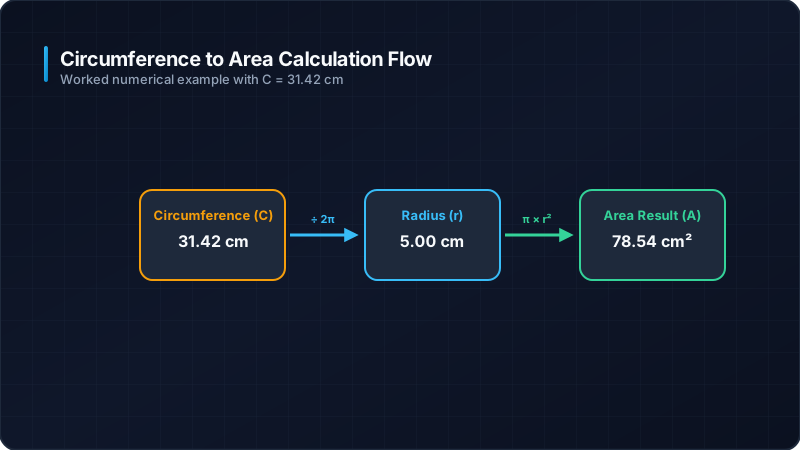
Find radius from circumference by dividing the given circumference by 2π. For a circumference of 31.42, divide by 6.28 (which is 2π), giving a radius from circumference result of exactly 5.
This convert circumference to radius step is the critical bridge connecting circumference information to standard area calculations. Skipping or rushing this division is where most circumference to radius method errors happen.
How to Substitute Radius Into the Area Formula
Once radius is found, plug it directly into A = πr² as usual. This substitute radius into area formula step returns to entirely familiar territory, using the exact same process from standard circle area problems.
For radius 5, calculate 5² = 25, then multiply by pi: 78.54 square units. This area in terms of circumference two-step process, rearrange then calculate, handles any circumference area conversion reliably.
How to Solve Circle Area Examples From Circumference
| Circumference (C) | Derived Radius (r = C/2π) | Calculated Area (A = πr²) |
|---|---|---|
| 31.42 | 5.00 | 78.54 |
| 62.83 | 10.00 | 314.16 |
| 18.85 | 3.00 | 28.27 |
This circle circumference area example table shows the two-step reverse circumference problem method applied consistently across varied starting values.
How to Verify the Final Area
Check your work by calculating circumference from your found radius using C = 2πr. If it matches your original given circumference, your area from circumference calculator result is confirmed accurate and correct.
This verify circle area result habit catches division errors during the rearrangement step. Since this method involves more steps than standard area problems, this check deserves extra attention every single time.
How to Work With Circumference Given as a Decimal
Circumference given as a decimal, like 47.5, follows identical steps. Divide by 2π to get radius (7.56), square it (57.15), then multiply by pi for an area of roughly 179.51 square units.
This circle area from C approach with exact circumference or messy decimal values stays consistent throughout. Rounding only at the final step, not during intermediate calculations, preserves the most possible accuracy.
How to Find Area From Circumference Without Finding Diameter First
Some students prefer converting circumference to radius directly, skipping diameter entirely, since diameter isn't required for the area formula. This calculate area from C shortcut saves one unnecessary conversion step.
This streamlined circumference radius formula approach works faster once practiced. There's no mathematical need to find diameter as an intermediate step when radius alone unlocks the entire circle area calculation.
How to Handle Exact Versus Rounded Circumference Values
Using exact circumference values with symbolic pi preserves precision longer. Using rounded circumference, like 3.14 times diameter, introduces small errors that compound through the rearrangement and squaring steps ahead.
For sensitive circle formula conversion work, delay rounding until the absolute final answer. This habit, common in advanced circumference to area problems, produces noticeably more accurate results than early rounding choices.
Conclusion: How to Find Circle Area From Circumference
Finding circle area from circumference just adds one rearrangement step before familiar territory returns. Practice this circumference to area formula process regularly, and these reverse circle calculation problems become just as manageable as standard ones.